The Tristan Name Meaning Bible topic has become increasingly popular among Christian parents looking for a meaningful and faith-inspired name. While Tristan is not mentioned directly in Scripture, its historical roots and spiritual symbolism reflect biblical themes of hope, endurance, and God’s redeeming grace.
Understanding the Tristan name meaning Bible connection reveals how this unique name can represent strength through trials and unwavering faith. In this guide, you’ll discover the origin of Tristan, its spiritual significance, biblical parallels, and why many believers consider it a beautiful choice for a Christian child.
What Does the Name Tristan Mean?
At its core, the name means “sorrowful” or “sad” an unlikely pick, at first glance, for parents wanting something uplifting. But the biblical meaning isn’t in the literal translation alone; it’s in what Scripture says happens after sorrow. Grief, in the Christian worldview, is rarely the destination. It’s the doorway to something stronger.
Etymology and Historical Origins of Tristan
The name traces to the Latin tristis, meaning sad or sorrowful, moving through Old French and Celtic tradition before attaching to the medieval legend of Tristan and Isolde.
Welsh spellings like Trystan and Drystan preserved the same root, carrying centuries of storytelling about loyalty forged through hardship.
Is Tristan Mentioned in the Bible?
No this name does not appear in any translation, including the King James Version, nor is there a character, tribe, or place by that name in Scripture. This is true of many beloved Christian names, including Christopher, Madison, and Stephanie.
The absence doesn’t diminish the spiritual weight; the connection simply comes through the theme, not a named figure in the text.
Spiritual Significance of the Name Tristan
Because the root meaning centers on sorrow, its spiritual significance is best understood through the biblical pattern of grief transformed into strength.
Scripture shows that hardship and waiting are where character is built and faith deepens a reminder that pain is never wasted.
Christian Symbolism and Faith Connections
Jesus told His disciples their grief would turn to joy (John 16:20), and Paul reminded believers that God works all things, including painful ones, for good (Romans 8:28). Viewed this way, the name can symbolize:
- Emotional depth and empathy for those who are hurting
- Endurance through difficult circumstances
- The promise that mourning gives way to comfort
- A quiet strength that isn’t loud, but steady
Tristan in Biblical History and Tradition

While not biblical by origin, Christian families have long adopted names for symbolic resonance. Baptismal records from medieval Europe show it appearing among Christian households as early as the Middle Ages, chosen for its loyalty and steadfast-love associations.
Don’t Miss: Good Morning Prayer for My Love
The Origin of Tristan in Celtic and Christian Culture
Its Celtic roots run through the legend of Tristan and Isolde, a tale of forbidden love that captivated medieval Europe. As Christianity spread through Celtic regions, emotionally weighty names like this were absorbed into church life, sorrow no longer just tragic, but redemptive, since suffering in the biblical narrative is never the end of the story.
Biblical Names Similar to Tristan
For a similar feel with a direct biblical tie, consider these alternatives:
| Name | Meaning | Biblical Connection |
| Job | Persecuted / hated | Endured extreme suffering, stayed faithful |
| Jeremiah | God will exalt | Known as the “weeping prophet” |
| Naomi | Pleasant | Grief followed by restoration |
| Joseph | He will add | Suffering that led to purpose |
| Thomas | Twin | Doubt transformed into belief |
Bible Verses That Reflect the Meaning of Tristan
Scripture is full of language mirroring the emotional journey behind this name sorrow met with divine nearness, and trials that produce lasting character.
James 1:12 – Endurance Under Trial
The KJV reads: “Blessed is the man that endureth temptation: for when he is tried, he shall receive the crown of life.” Endurance isn’t survival alone, it’s rewarded.
Romans 5:3–5 – Suffering Produces Hope
Paul writes that believers can glory even in tribulations, since tribulation produces patience, patience produces experience, and experience produces hope, a roadmap from sorrow to hope.
Psalm 34:18 – God Is Close to the Brokenhearted
“The Lord is nigh unto them that are of a broken heart; and saveth such as be of a contrite spirit.” This is often the clearest biblical picture of God’s nearness in sorrow.
Job: Suffering and Faith
Job lost nearly everything yet refused to curse God the fullest picture of sorrow that never separates a person from faith.
Jeremiah: Prophet of Sorrow
Known as the weeping prophet, Jeremiah carried deep grief over Israel’s suffering yet stayed faithful to his calling.
Joseph: From Pit to Palace
Sold into slavery and later imprisoned unjustly, Joseph’s story shows sorrow giving way to the purpose of what his brothers meant for evil, God meant for good.
Comparison Table
| Biblical Figure | Season of Sorrow | Outcome |
| Job | Loss of family, health, wealth | Restored and blessed |
| Jeremiah | Grief over a nation’s rebellion | Faithful prophetic legacy |
| Joseph | Betrayal, slavery, imprisonment | Became second to Pharaoh |
| Thomas | Doubt after Christ’s death | Confessed “My Lord and my God” |
Thomas: Doubt to Belief
Thomas doubted the resurrection until he saw the risen Christ himself on a journey from sorrowful disbelief to bold faith, mirroring the same arc found in this name’s meaning.
Biblical Alternatives to Tristan
Joseph, Thomas, Jeremiah, and Job each carry similar emotional themes while appearing explicitly in Scripture.
Why Parents Choose Tristan: A Biblical Perspective
Many Christian parents are drawn to it because of its layered meaning, a name that acknowledges hardship while pointing toward hope. Sorrow will come, it says, but it won’t have the last word.
Tristan Name Meaning in Hebrew and Greek
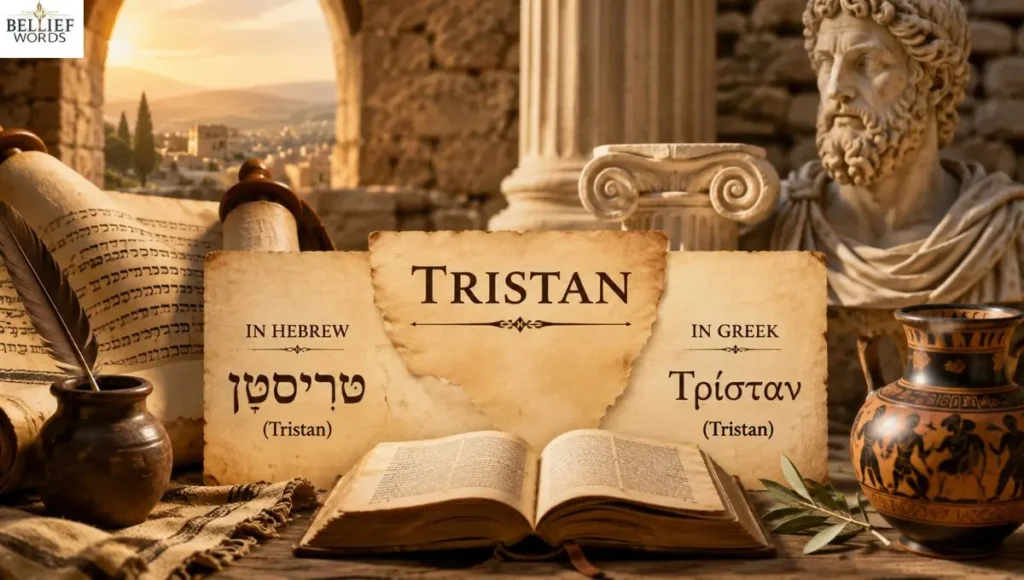
There’s no direct Hebrew or Greek origin here; it’s a Latin-rooted, Celtic-adopted name. Still, its themes translate well into biblical languages rich with vocabulary around sorrow and transformation.
Hebrew Concepts of Sorrow and Strength
In Hebrew thought, grief (yagon) is closely tied to spiritual refinement. The Psalms and the story of Job show that seasons of anguish are where trust in God is tested and deepened rather than lost.
Greek Spiritual Transformation Terms
In the Greek New Testament, thlipsis (tribulation or pressure) appears throughout Paul’s writings, describing the pressure that produces spiritual maturity closely paralleling this name’s symbolic journey.
Linguistic Comparison Table
| Language | Term | Meaning | Theme |
| Latin | Tristis | Sorrowful | Root of the name |
| Hebrew | Yangon | Grief | Refinement through trial |
| Greek | Thlipsis | Tribulation | Pressure that builds character |
The Cultural and Religious Impact of the Name Tristan
Its popularity has grown well beyond medieval literature, reflecting a wider trend of choosing names for emotional depth rather than scriptural mention alone.
Popularity Trends in Christian Communities
It has stayed steadily popular among Christian families in the U.S. and Europe, often chosen for its strong sound and meaningful backstory.
Cross-Denominational Acceptance
Since it isn’t tied to one tradition, it’s used comfortably across Catholic, Protestant, and Orthodox families alike.
Celebrity Christian Usage
Several public figures within faith communities have chosen it for their children, citing its symbolism as much as its sound.
Academic Perspectives
Name scholars classify it as literary-Celtic rather than biblical, noting that Christian adoption came through emotional resonance rather than scriptural origin.
Social Perceptions and Faith Communities
Within many church communities, it’s seen as a name with quiet depth not flashy, but meaningful to those who know its story.
What the Bible Teaches About Names and Identity
Names carry real weight throughout Scripture, which helps frame this whole discussion.
God Names People Intentionally
God frequently assigns or changes names to reflect purpose Abram to Abraham, Jacob to Israel, Simon to Peter. Names in Scripture are rarely accidental.
Biblical Names Change to Reflect Transformation
A renamed person typically marks a turning point, a shift from who they were to who they’re becoming, echoing the sorrow-to-hope arc discussed above.
Names Reflect Character and Calling
Biblical names often describe character traits or a calling, reinforcing the idea that a name can shape identity even outside of Scripture.
Identity Ultimately Comes from Christ
A name’s meaning can be encouraging, but Christian teaching is clear that a believer’s deepest identity comes from relationship with Christ, not etymology alone.
Practical Application for Parents
Parents can lean into the meaning intentionally, teaching their child that sorrow is part of the human story but never the end of it, and that faith carries people through hard seasons into hope.
Conclusion
This name may not appear anywhere in Scripture, but its meaning sorrow transformed into strength echoes one of the Bible’s most repeated promises. From Job to Joseph to Jeremiah, God’s Word shows that hardship is never wasted when faith holds on.
For parents drawn to it, this name can serve as a daily reminder that grief is not the final chapter. With roots in resilience and a story pointing toward hope, it carries real spiritual depth, even without a direct biblical mention.
Frequently Asked Questions
Does Tristan mean sorrow in the Bible?
Its Latin root “tristis” means sorrowful, a theme Christians often link to grief turning into hope.
Is Tristan a Christian name?
Yes, widely used among Christian families for centuries, though absent from Scripture.
What is the spiritual meaning of Tristan?
Enduring sorrow, emotional depth, and the promise that mourning leads to comfort.
Is there a Bible verse for the name Tristan?
No direct verse, but Psalm 34:18 and James 1:12 reflect its core themes.
What is the Hebrew meaning of Tristan?
No Hebrew origin, but its themes echo Hebrew concepts of grief and refinement.
What are good biblical alternatives to Tristan?
Joseph, Thomas, and Jeremiah carry similar depth and appear directly in Scripture.

Welcome to beliefwords! I’m Danish Ali. Christian Faith Writer | 4+ Years Bible Study Experience | Founder of (beliefwords.com)
Sharing prayers, Daliy Bible Verses, Blessings, Name Meanings and biblical wisdom to strengthen your faith.