Many parents and Bible readers search for the Tristan meaning in the Bible to discover whether this popular name has biblical roots or spiritual significance. Although Tristan is not mentioned anywhere in Scripture, its rich history and symbolic meaning continue to attract Christian families.
Understanding the Tristan meaning in the Bible helps separate biblical fact from spiritual symbolism, giving parents a clearer perspective before choosing the name. Derived from Latin and Celtic origins, Tristan is commonly associated with sorrow, courage, loyalty, and hope. In this guide, you’ll learn whether
Tristan is a biblical name, its true origin and meaning, its connection to biblical themes, and the Bible verses that reflect its inspiring symbolism from a clear, faith-based perspective.
Is Tristan a Biblical Name?
No Tristan is not a biblical name. You won’t find it in Genesis, the Psalms, the Gospels, or anywhere else in Scripture. It doesn’t belong to a prophet, king, apostle, or minor character.
Tristan actually comes from medieval European legend, most famously the tale of Tristan and Isolde, a story of loyalty and heartbreak that predates most modern baby-naming trends by centuries. So while people frequently search for the Tristan meaning in Bible context, the honest answer is that the name’s roots are literary and linguistic, not scriptural.
That said, plenty of beloved names Chloe, Amber, Wendy also skip Scripture entirely and still carry meaningful, faith-friendly interpretations.Tristan fits that same category.
What Does Tristan Actually Mean?
Tristan’s meaning traces back to two main sources:
| Origin | Root Word | Meaning |
| Latin | tristis | Sorrowful, sad |
| Celtic (Pictish) | Drustan | Bold, tumultuous, noisy |
| Old French/Medieval | Tristan legend | Loyal, devoted, courageous |
Most naming dictionaries link Tristan primarily to the Latin word for “sorrowful.” This connects to the medieval legend, where Tristan’s birth and life were marked by grief and tragic love. But there’s a second layer worth knowing: the Celtic root Drustan leans toward boldness and tumult rather than sadness, giving the name a dual character: part heavy-hearted, part strong-willed.
So when someone asks what Tristan actually means, the fair answer is: a name that blends sorrow with strength, born from legend rather than Scripture.
What Is the Tristan Meaning in Bible Symbolism?
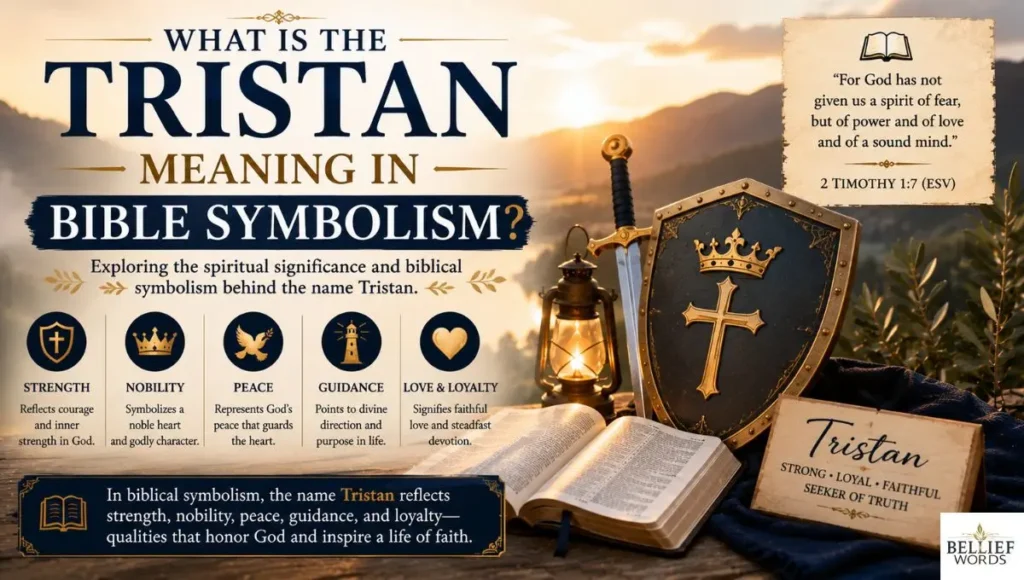
Even without appearing in the biblical text, the Tristan meaning in Bible symbolism resonates with a theme that runs through nearly every book of Scripture: sorrow that leads somewhere better.
Think about it the Bible is full of people whose lowest moments became turning points:
- David wept bitterly in the Psalms before finding restored joy.
- Job endured devastating loss yet remained faithful.
- Jesus wept over Jerusalem and at the tomb of Lazarus, showing that sorrow and compassion walk hand in hand.
Because Tristan’s literal meaning leans toward “sorrowful,” many Christian parents connect it symbolically to this biblical pattern: grief is never the end of the story. It’s often the beginning of transformation, humility, and deeper faith. In that sense, Tristan can represent a heart that feels deeply and a life shaped by resilience rather than defined by hardship.
Biblical Names Similar to Tristan and Their Meanings
If you love the sound of Tristan but want something with direct Scripture roots, here are a few names that share a similar tone or feel:
| Name | Biblical Meaning |
| Josiah | “The Lord supports” |
| Elijah | “My God is the Lord” |
| Asher | “Happy, blessed” |
| Levi | “Joined, attached” |
| Judah | “Praised” |
| Silas | “Man of the forest” (associated with Paul’s companion) |
Each of these carries a documented scriptural presence, unlike Tristan.They’re worth considering if a Bible-verified name matters to you, while still keeping a similarly strong, timeless sound.
Don’t Miss: What Is the Meaning of Life
Why Do Christians Search for Tristan Meaning in the Bible?
This is one of the most searched questions around the name, and it makes sense. Christian parents often want reassurance that a name they love aligns with their faith, even if it isn’t lifted straight from Scripture.
People search for Tristan’s biblical meaning for a few common reasons:
- They want to know if the name has any spiritual significance before using it for a child.
- They’re curious whether “sorrowful” carries a negative connotation in a faith context.
- They want a devotional angle, a way to tie the name to a verse or blessing during a baby dedication or baptism.
The search itself reflects something beautiful: a desire to connect identity with meaning, even for names Scripture never mentions directly.
Should Parents Choose the Name Tristan for a Baby?
Yes many Christian parents choose Tristan precisely because its meaning invites a deeper conversation about faith. A name meaning “sorrowful” doesn’t have to be discouraging. In a Christian worldview, sorrow is often paired with comfort, and mourning is described as something God turns into joy.
A few points worth weighing:
- Pro: The name is modern, popular, and easy to pronounce, while still carrying depth.
- Pro: Parents can lean into the redemptive symbolism sorrow transformed into strength as a meaningful blessing over their child.
- Consideration: If having a name directly documented in Scripture matters to your family, Tristan won’t check that box on its own.
Ultimately, choosing Tristan is less about literal biblical presence and more about the values you attach to it.
Does Tristan Have Hebrew or Greek Roots?
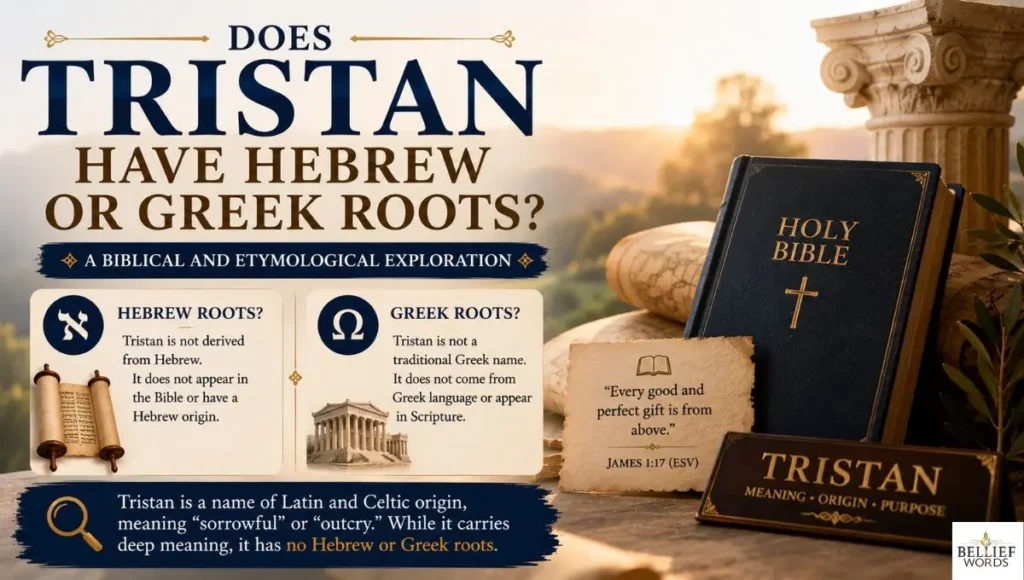
No.Tristan does not have Hebrew or Greek roots. It is Latin and Celtic in origin, not part of the Hebrew naming tradition found throughout the Old Testament or the Greek names common in the New Testament.
This is a frequent point of confusion because so many popular baby names today (Noah, Adam, Daniel) are Hebrew in origin. Tristan simply isn’t one of them but that doesn’t stop it from being paired with Hebrew spiritual themes, like the idea that a “broken and contrite heart” is something God draws near to.
Bible Verses That Reflect Tristan’s Symbolic Meaning
While Tristan isn’t a scriptural name, these verses are commonly paired with its symbolic meaning of sorrow turned to strength:
- Psalm 34:18 “The Lord is close to the brokenhearted and saves those who are crushed in spirit.”
- Psalm 30:5 “Weeping may endure for a night, but joy comes in the morning.”
- Romans 8:18 “Our present sufferings are not worth comparing with the glory that will be revealed in us.”
- 2 Corinthians 1:3-4 God comforts believers in trouble so they can comfort others.
These verses are often shared at baby dedications or included in a nursery keepsake for parents who want to connect Tristan’s name meaning to a faith-based blessing.
Is Tristan a Good Christian or Catholic Name?
Yes, Tristan works well as a Christian or Catholic first name. While it isn’t found among canonized saints or biblical figures, plenty of Catholic families choose names based on virtue and symbolism rather than direct scriptural or saintly origin.
If you want extra reassurance, some parents pair Tristan with a confirmed saint’s name as a middle name for example, Tristan Michael or Tristan Joseph to anchor the name more firmly within Catholic tradition while keeping Tristan as the primary, everyday name.
Conclusion
Tristan may not be written into Scripture, but its meaning still speaks to something deeply biblical: the idea that sorrow rarely has the final word. Rooted in Latin and Celtic history rather than Hebrew or Greek text, the name carries a quiet strength that many Christian parents find worth embracing.
Whether you’re naming a child or simply satisfying your curiosity, Tristan’s story is a reminder that meaning isn’t only found in ancient texts, it’s also found in the values we choose to attach to the names we love.
Frequently Asked Questions
Is Tristan mentioned anywhere in the Bible?
No, Tristan does not appear in the Bible. It comes from medieval legend and Latin/Celtic word roots, not Scripture.
What does the name Tristan mean spiritually?
Spiritually, Tristan is often linked to sorrow transformed into strength, echoing biblical themes of grief turning into hope and growth.
Is Tristan a Hebrew name?
No, Tristan is not Hebrew. It has Latin (“tristis,” meaning sorrowful) and Celtic (“Drustan,” meaning bold) origins instead.
Can Christian parents use Tristan as a baby name?
Yes, many Christian and Catholic parents use Tristan and pair it with Bible verses or a saint’s middle name for added meaning.
What is the closest biblical name to Tristan?
Names like Silas, Josiah, or Levi carry similar strength and are directly documented in Scripture, unlike Tristan.
Does Tristan mean sorrow in every culture?
Mostly, yes the Latin root “tristis” dominates most naming references, though the Celtic root leans toward boldness rather than sadness.

Welcome to beliefwords! I’m Danish Ali. Christian Faith Writer | 4+ Years Bible Study Experience | Founder of (beliefwords.com)
Sharing prayers, Daliy Bible Verses, Blessings, Name Meanings and biblical wisdom to strengthen your faith.