Many people picture God as an elderly man sitting on a throne in the clouds, but that image comes more from tradition and art than from Scripture.The biblically accurate God is revealed throughout the Bible as holy, eternal, all-powerful, and full of perfect love. From Genesis to Revelation, God consistently reveals His character, His purpose, and His desire to redeem humanity through Jesus Christ.
Understanding the biblically accurate God helps believers build a stronger faith, avoid common misconceptions, and worship Him according to biblical truth.This guide explores what the Bible truly teaches about God’s nature, attributes, and why knowing Him changes every aspect of life.
What Does “Biblically Accurate God” Mean?
The phrase points to one simple standard: let Scripture define God, not tradition, culture, or personal preference. It isn’t a demand for perfect theological mastery, it’s a commitment to test every idea about God’s character against what the Bible actually records.
That single shift, from assumption to Scripture, is what separates a casual impression of God from an accurate one. It matters because sincere assumptions still cannot correct themselves; only Scripture has the authority to define its own subject.
Core Attributes of God According to Scripture
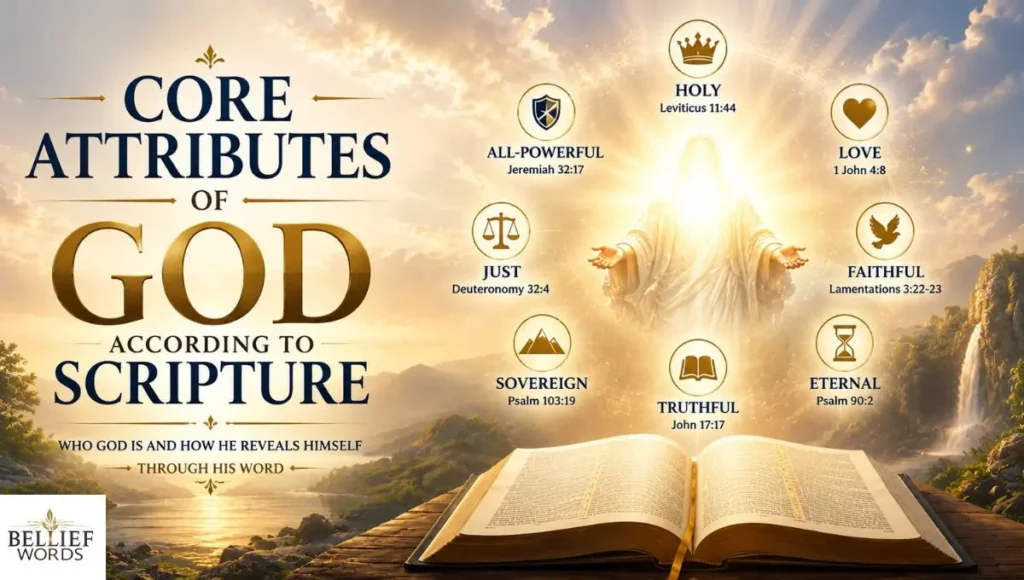
The Bible never presents God’s traits as a random list. They appear consistently across law, poetry, prophecy, and gospel, each one reinforcing rather than competing with the others. These are not abstract theology-class labels they describe the same God believers pray to, worship, and lean on in ordinary life.
| Attribute | What Scripture Reveals | Key Verse |
| All-powerful (Omnipotent) | Nothing is too difficult for Him | Jeremiah 32:17 |
| All-knowing (Omniscient) | His understanding has no limit | Psalm 147:5 |
| Ever-present (Omnipresent) | No place exists outside His reach | Psalm 139:7-10 |
| Holy | Entirely set apart from sin | Isaiah 6:3 |
| Eternal | Without beginning or end | Psalm 90:2 |
| Unchanging | The same across every generation | Malachi 3:6 |
| Loving | Love isn’t just what He does it’s who He is | 1 John 4:8 |
| Just | Never bends what is right | Deuteronomy 32:4 |
A God this powerful could easily feel distant. Scripture insists He is just as close as He is great.
How Scripture Describes God’s Appearance
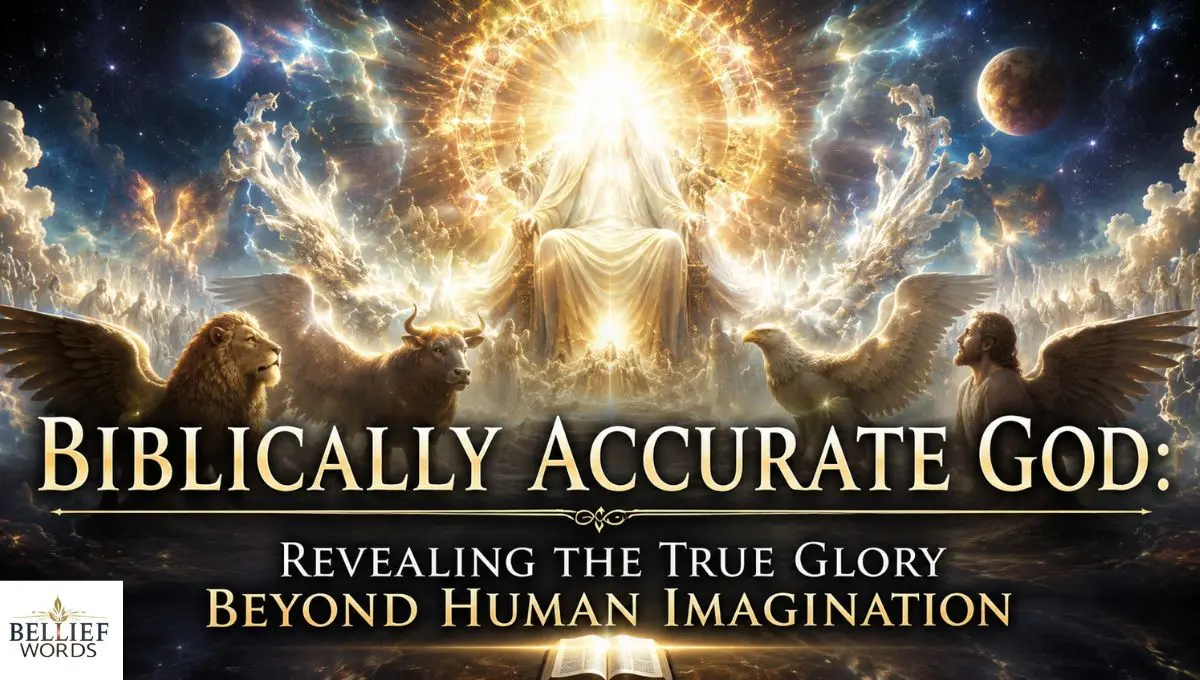
This is usually where curiosity peaks, since centuries of art have trained imaginations to expect a familiar human shape. Ezekiel instead describes wheels within wheels, four living creatures, and a throne wrapped in fire (Ezekiel 1:4-28).
Isaiah sees the Lord “high and lifted up,” His train filling the temple while seraphim cover their faces (Isaiah 6:1-4).Yet Scripture also insists no one has ever seen the fullness of that glory and lived Moses was told plainly, “Thou canst not see my face: for there shall no man see me, and live” (Exodus 33:20).
Paul later writes that God dwells “in the light which no man can approach unto” (1 Timothy 6:16). His glory isn’t hidden out of distance; it’s simply too vast for human sight to hold. These visions were never meant as decoration; they were given to steady faith in moments of exile, doubt, and national crisis.
Jesus Christ: The Clearest Picture of Who God Is
If God’s full glory is unapproachable, Jesus is how that gap closes. Paul calls Him “the image of the invisible God” (Colossians 1:15), and Hebrews describes Him as “the express image of his person” (Hebrews 1:3).
When Philip asked to see the Father, Jesus answered simply: “he that hath seen me hath seen the Father” (John 14:9). Every attribute above power, holiness, love, justice becomes visible in how Jesus lived, taught, suffered, and rose again.
This is why the Gospels matter so much for anyone asking what God is really like: they are not commentary about God, they are God walking among us.
The Trinity: One God in Three Persons
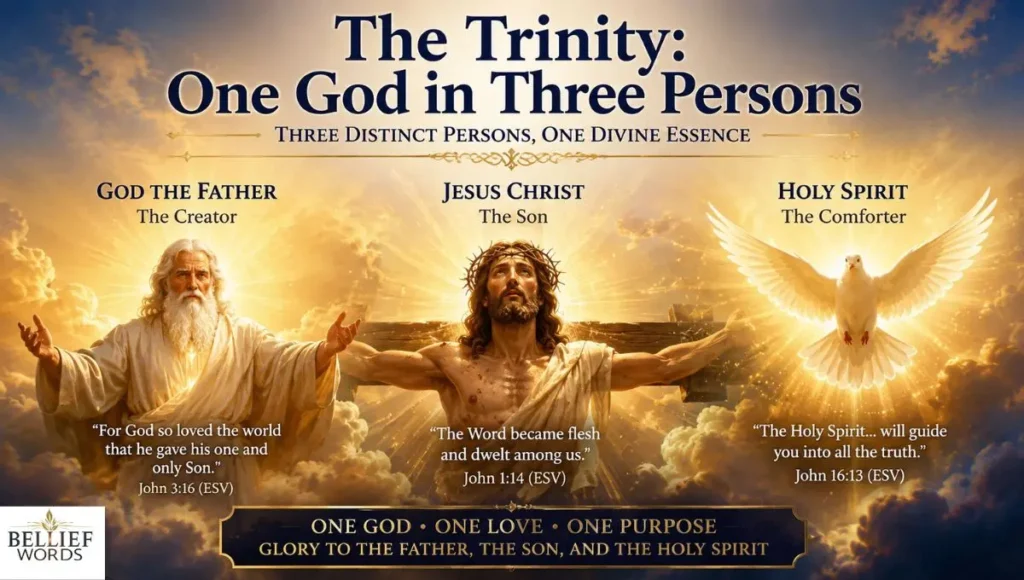
Scripture describes one God who eternally exists as three distinct persons Father, Son, and Holy Spirit each fully God, never three separate gods. Genesis 1:26 uses the plural “let us make man in our image,” Jesus commands baptism “in the name of the Father, and of the Son, and of the Holy Ghost” (Matthew 28:19), and Deuteronomy 6:4 still affirms “the LORD our God is one LORD.”
Christians aren’t asked to fully explain this mystery, only to trust what has been revealed. It is neither three gods nor one person wearing three masks; it is a relationship within God’s own nature, and believers are invited to share in it through prayer and worship.
Don’t Miss: Biblical Meaning of the Name Charlotte
Common Misconceptions About God’s Character
Two extremes tend to distort the biblically accurate God. One imagines Him as an angry judge waiting to punish.The other imagines Him as endlessly permissive, overlooking sin entirely. Scripture holds holiness and mercy together without flattening either.
Culture, personal history, and even well-meaning tradition can quietly reshape God into someone easier to manage Scripture keeps pulling that picture back to what is actually written
Both extremes borrow selectively from the text while ignoring the rest, which is exactly the pattern a Scripture-first approach refuses to follow.
Why This Matters for Everyday Faith

This isn’t just theological trivia. A distorted view of God quietly shapes prayer, worship, and daily decisions around a false premise. Knowing God as Scripture describes Him moves fear into confidence (1 John 4:18), replaces striving with grace-shaped rest (Ephesians 2:8-9), and gives prayer a foundation solid enough to hold real trust (Philippians 4:6-7).
Faith built on truth simply carries weight that guesswork never can. It also changes how believers process suffering, since a distorted view of God tends to either minimize real pain or unfairly blame God for it.
Conclusion
The biblically accurate God is far greater, more consistent, and more personal than any borrowed image could ever be. His power, holiness, and love aren’t competing traits; they’re one unified character, fully revealed in Jesus Christ.
Letting Scripture define God, rather than tradition or assumption, changes how a person prays, worships, and lives daily. That clarity is worth returning to Scripture for, again and again, for as long as faith continues to grow.
Frequently Asked Questions
What does “biblically accurate God” mean?
It means understanding God strictly through Scripture’s own words, rather than art, tradition, or personal assumption.
Is the God of the Old Testament different from the New Testament?
No Malachi 3:6 and Hebrews 13:8 both affirm that God’s character never changes across either Testament.
How does Jesus reveal God’s true nature?
Colossians 1:15 and John 14:9 both describe Jesus as the clearest, most direct picture of who God is.
Can someone truly know God, not just know facts about Him?
Yes, Scripture consistently frames faith as a relationship, built through prayer and trust, not mere information.
What role does the Holy Spirit play in knowing God?
The Spirit guides believers into truth and makes God’s character personally understandable, not just theoretically true.
Can human reasoning alone fully understand God?
No Isaiah 55:8-9 shows God’s thoughts surpass human logic, which is why He reveals Himself through Scripture.

Welcome to beliefwords! I’m Danish Ali. Christian Faith Writer | 4+ Years Bible Study Experience | Founder of (beliefwords.com)
Sharing prayers, Daliy Bible Verses, Blessings, Name Meanings and biblical wisdom to strengthen your faith.