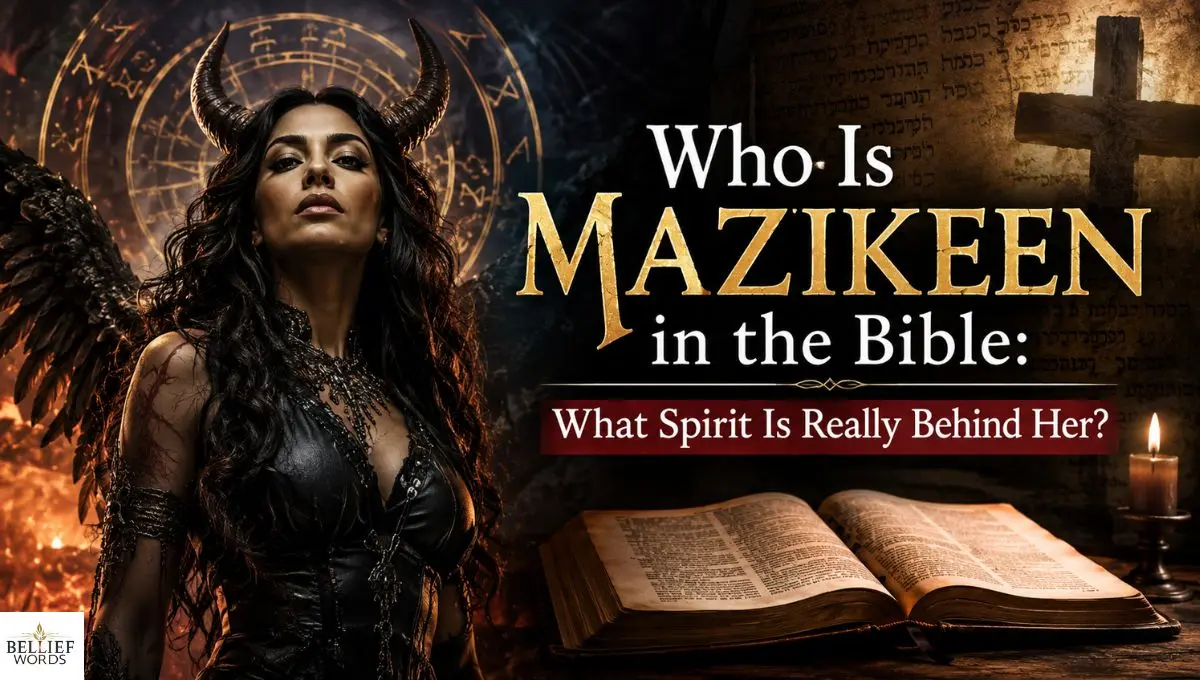
If you’re searching for Mazikeen in the Bible, you may be wondering whether this mysterious demon is actually mentioned in Scripture. The short answer is no: Mazikeen in the Bible does not appear as a named character in Genesis, Psalms, the Gospels, or any other canonical book.
However, the name has roots in ancient Jewish folklore and the Talmudic concept of mazikin, harmful or troublesome spirits. In this guide, we’ll explore the origins of Mazikeen, her connection to Jewish folklore and Lilith, and how an ancient term eventually became one of modern fiction’s most recognizable demons.
Is Mazikeen a Real Demon?
Not in the way modern fiction portrays her. There is no individual demon named Mazikeen in the Bible, the Apocrypha, or any early Judeo-Christian manuscript. What is real is the broader category of spirits her name is drawn from.
Ancient Jewish tradition described a class of invisible, mischief-making beings, and later writers reshaped that concept into a single, named character for the page and screen.
What the Talmud Says About Mazikin
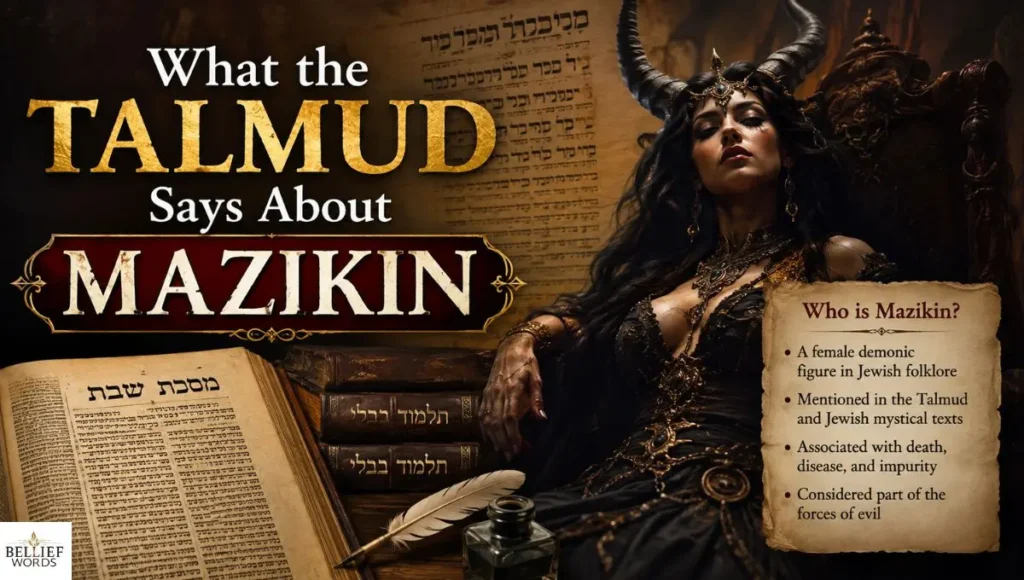
The word behind her name is “Mazikin” (sometimes spelled Mazzikin or Mazzikim), from the Hebrew root meaning “to harm” or “to damage.” The Talmud, the foundational text of Rabbinic Judaism, references these spirits several times, describing them as unseen forces capable of causing illness, accidents, and general household chaos.
Rabbis debated how to guard against them, offering blessings and rituals meant to keep a home safe from their influence. They were never treated as one demon with a personality or backstory; they were a whole category, closer to a folk explanation for bad luck than a named villain.
Mazikeen Mythology
Origins in Jewish Folklore
Jewish folklore is full of unseen beings that exist alongside humanity without ever fully revealing themselves. Mazikin fit that pattern.
They were said to move through the world unnoticed, sometimes even living in close proximity to people, which explains why certain customs called for caution around empty houses, ruins, or lonely roads at night.
The Folklore Story
One recurring tale describes Mazikin as descendants of unions between Adam and demonic spirits during a period of separation from Eve, a legend closely tied to the Lilith mythos.
Because they carried both human and spirit traits, they were imagined as capable of blending into daily life while still causing real harm from the shadows.
Understanding the Origin of the Name Mazikeen
The modern spelling “Mazikeen” is simply an anglicized form of the Hebrew plural “Mazzikim.” Writer Neil Gaiman picked up this obscure term for a supporting character introduced in The Sandman #22 in 1990, later expanded by the Lucifer comic series and its television adaptation. He wanted a name that sounded ancient and authentic, and borrowing directly from Talmudic vocabulary accomplished exactly that.
Cultural and Spiritual Significance of the Name Mazikeen
Even though Mazikeen in the Bible does not exist as a literal entry, the name still carries weight for readers interested in spiritual history. It represents how ancient communities processed unexplained suffering, illness, and misfortune by attaching it to unseen agents.
For many believers today, the name is a reminder that folklore and scripture, while related, are not the same category of truth.
Who Is Mazikeen in Sandman?
In Neil Gaiman’s Sandman universe, Mazikeen is introduced as a member of the Lilim, described as one of the most disfigured and fearsome demons of Hell.
She becomes closely tied to the fallen angel Lucifer Morningstar, eventually following him when he abandons his throne. This origin point is where the character most people recognize today truly begins.
Is Mazikeen Mentioned Directly in the Bible?
No. A direct search across major Bible translations, concordances, and databases such as Blue Letter Bible turns up zero results for the name.
The Bible does discuss demons, unclean spirits, and spiritual warfare at length, but it never assigns individual names to a hierarchy of minor demons the way later Jewish and pop-culture traditions do.
Don’t Miss: Vanessa Meaning in Bible: Is There a Spiritual or Biblical Connection?
Mazikeen vs. Biblical Demons: Key Differences Explained
| Feature | Mazikeen (Fiction/Folklore) | Biblical Demons |
| Named individual | Yes, in modern fiction | Rarely; often unnamed |
| Scriptural basis | None | Present in Old and New Testament |
| Source material | Talmud, folklore, comics, TV | Bible text itself |
| Physical description | Detailed (scarred face, warrior) | Minimal or symbolic |
| Role | Character with personal arc | Spiritual force of evil |
Is Mazikeen a Biblical Character or a Modern Fictional Creation?
She is best described as a modern fictional creation built on a genuine ancient foundation. The name and general concept predate her by centuries, but the personality, backstory, and appearance were invented for contemporary comics and television.
What Kind of Demon Is Mazikeen in the Bible?
Since the character herself is not in scripture, this question is really asking which biblical concept she resembles most closely.
Closest Biblical Parallels
- Unclean spirits referenced throughout the Gospels, tied to affliction and torment
- Lilith, mentioned once in Isaiah 34:14, associated with wilderness and desolation
- Fallen angels, described in Genesis 6 and Jude, linked to rebellion against divine order
Mazikeen of Lilith
Fictional lore ties Mazikeen to Lilith as her spiritual mother or creator, placing her within the Lilim, a fictional demon lineage.
Lilith herself has only one direct biblical reference and a much larger presence in later Jewish mysticism, which is where most of this maternal connection actually originates.
Who Is the Father of Mazikeen?
In the comics and television canon, Mazikeen’s parentage is left largely undefined, though she is consistently framed as part of Lilith’s demonic bloodline rather than tied to a specific father figure. This ambiguity keeps the focus on her connection to Lilith and to Hell itself.
Her Relationship with Lucifer
Loyal Demon
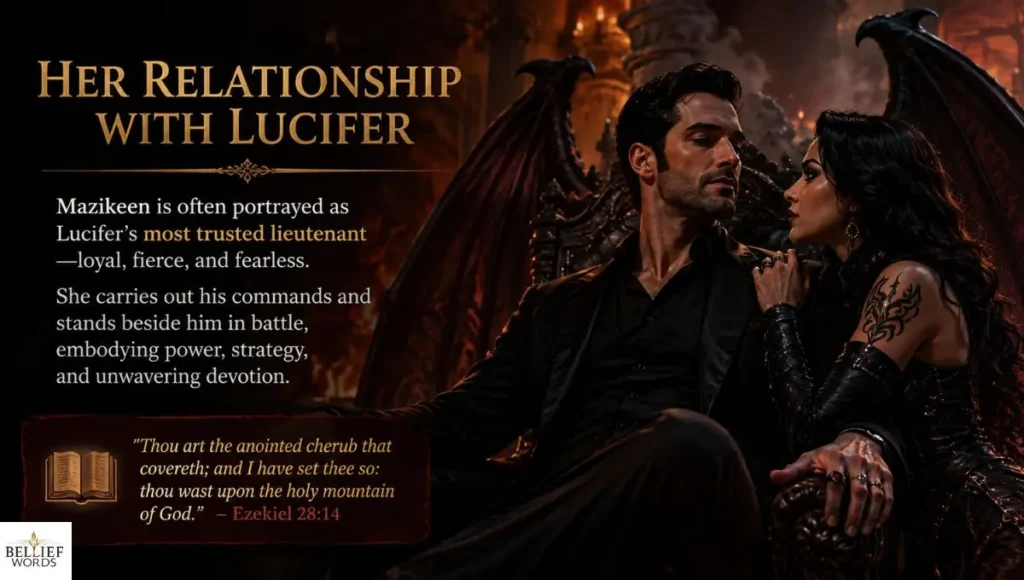
Across nearly every adaptation, Mazikeen is Lucifer’s closest ally, following him from Hell to Earth and standing beside him through every major conflict.
Strong and Independent Woman
Modern retellings intentionally give her agency, ambition, and her own goals rather than making her a passive sidekick.
Complexities of Existence
Her arc frequently wrestles with identity, belonging, and what it means to seek purpose outside the role she was created for in Hell.
Mazikeen Demon Face
What Happened to Mazikeen’s Face?
In the Lucifer TV series, Mazikeen’s face is shown partially scarred, the result of an act of self-harm carried out to avoid an unwanted arranged demon marriage. It becomes a visual symbol of her defiance and refusal to be controlled.
The Bigger Picture: Mazikeen’s Cultural Impact
Why She Resonates
Audiences connect with Mazikeen because she is not a simple villain. She is loyal, funny, fierce, and visibly wounded, which makes her feel more human than many purely evil characters.
Themes She Embodies
She represents loyalty tested by change, strength born from suffering, and the search for identity beyond an assigned role, themes that resonate far outside her fictional demon origins.
Conclusion
Mazikeen in the Bible simply does not exist as a named figure, and no honest reading of scripture will produce her. What does exist is a genuine thread of Jewish folklore about harmful, unseen spirits called Mazikin, later reshaped by gifted storytellers into one of pop culture’s most compelling demons.
Understanding this distinction matters for anyone who wants to separate entertainment from scripture. Mazikeen can still be enjoyed as a rich, well-written character, as long as her ancient name is not mistaken for a biblical truth claim.
Frequently Asked Questions
Is Mazikeen real in Jewish tradition?
Not as an individual; Mazikin were a category of harmful spirits in Talmudic folklore, not a single named being.
Does the Bible mention Mazikeen by name?
No, the name never appears in any canonical translation of the Old or New Testament.
Who created the Mazikeen character?
Neil Gaiman created her for DC Comics, first appearing in The Sandman #22 in 1990.
Is Mazikeen related to Lilith in the Bible?
Lilith appears once in Isaiah 34:14; her fictional link to Mazikeen comes from later folklore, not scripture.
What does the name Mazikeen mean?
It derives from the Hebrew “Mazzikim,” meaning harmful or damaging spirits.
Is Mazikeen a demon or an angel?
She is portrayed strictly as a demon, a member of the fictional Lilim demon lineage tied to Hell.

Welcome to beliefwords! I’m Danish Ali. Christian Faith Writer | 4+ Years Bible Study Experience | Founder of (beliefwords.com)
Sharing prayers, Daliy Bible Verses, Blessings, Name Meanings and biblical wisdom to strengthen your faith.