The biblical meaning of the name Evelyn is often connected with light, life, and being deeply loved by God. Although Evelyn is not mentioned in the Bible and has Norman-French and Germanic origins rather than Hebrew, many Christians appreciate its spiritual symbolism.
The name is widely understood to mean “desired,” “wished for,” or “beautiful life,” making it a meaningful choice for a baby girl. Its connection to Eve, the mother of all living, reflects God’s gift of life and hope. Evelyn also represents walking in God’s light, embracing faith, and trusting His loving purpose for every child.
Origin and Etymology of the Name Evelyn
Evelyn began as Aveline, a Norman-French name carried into England after the 1066 Conquest. Aveline is a diminutive of the Germanic name Ava, most often translated as “desired” or “wished for.” A popular theory links Aveline to the French word for hazelnut, but naming historians treat that as a coincidence of sound rather than the true source.
Evelyn’s Irish form, Éibhleann, adds one more layer, descending from the Old Irish óiph, meaning “beauty” or “radiance” the root behind the name’s gentle tie to light.
Is Evelyn a Biblical Name? The Scripture Connection

No, Evelyn is not a name found anywhere in the Bible, in the KJV or any other translation.It entered English use through Norman nobility, well over a thousand years after the biblical canon closed. What Evelyn does share with Scripture is a sound: its opening “Ev-” echoes Eve, the first woman named in Genesis 3:20, whose own Hebrew name, Chavah, means “life” or “mother of all living.”
Generations of Christian families have embraced that echo as a meaningful nod to Eve, though the two names have entirely different roots.That resemblance, not a shared history, is where Evelyn’s biblical meaning truly begins.
Don’t Miss: 50+ Powerful New Week Prayer For My Love
Three Core Biblical Themes in the Name Evelyn
Though Evelyn isn’t a scriptural name, three themes drawn from its sound and history connect it deeply to biblical truth.
1. Life God’s Most Precious Gift
Evelyn’s phonetic kinship with Eve ties it to Scripture’s very first breath of life, when God “breathed into his nostrils the breath of life; and man became a living soul” (Genesis 2:7, KJV). Jesus later promises the same abundant vitality:
“I come that they might have life, and that they might have it more abundantly” (John 10:10, KJV). For Christian parents, Evelyn becomes a daily reminder that life itself is God’s gift.
2. Desired and Chosen Beloved Before Birth
Unlike the Hebrew echo, “desired” is Evelyn’s actual documented root, and it mirrors a promise Scripture repeats often. God tells Jeremiah, “Before I formed thee in the belly I knew thee” (Jeremiah 1:5, KJV). A child named Evelyn carries that promise built into her own name: she was wished for, known, and chosen long before she arrived.
3. Light Illuminating the Darkness
Through its Irish branch, Éibhleann, Evelyn carries whispers of “radiance” and “beauty,” and light is one of Scripture’s most constant pictures of God’s presence. “Let there be light,” God speaks in Genesis 1:3, and Jesus later calls His followers to the same purpose:
“Ye are the light of the world” (Matthew 5:14, KJV). Parents drawn to this side of Evelyn’s meaning often see it as a calling for their daughter to carry hope into dark places.
Biblical Women Who Reflect the Spirit of Evelyn
Scripture never mentions Evelyn, but four women embody what the name represents: Eve’s gift of life, Hannah’s answered longing, Mary’s radiant purpose, and Ruth’s steady faith. Their stories follow, after a look at the biblical languages behind Evelyn’s meaning.
The Hebrew and Greek Perspective on the Name Evelyn
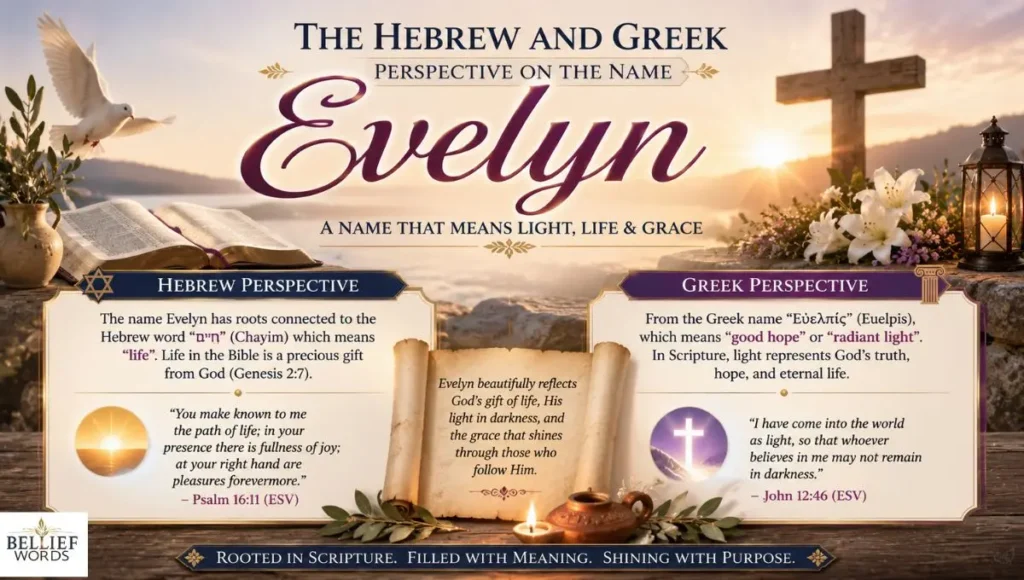
Does Evelyn have a Hebrew meaning?
Not directly. Evelyn has no documented Hebrew root; its real history runs through Norman-French and Germanic sources. Its “Hebrew meaning” is a borrowed one, inherited only through its popular association with Eve (Chavah), which genuinely does mean “life” or “living one” in Hebrew.
Greek roots and biblical symbolism
Evelyn has no Greek origin either, but its light theme connects naturally to the Greek New Testament word phos (φῶς), meaning “light.” John’s Gospel uses it to describe Christ Himself: “And the light shineth in darkness” (John 1:5, KJV). It’s a symbolic bridge, not a linguistic one.
How biblical languages influence its spiritual interpretation
Hebrew lends Evelyn its “life” theme through Eve; Greek lends it “light” through phos. Neither is a direct translation of the name both are meanings Christian tradition has layered onto Evelyn, much like these four biblical women:
Eve The First Mother
Formed by God and named “the mother of all living” in Genesis 3:20, Eve is the biblical root of Evelyn’s life theme, the first human life, and the ancestor of every life since.
Hannah The Wished-For Child
Hannah wept and prayed for years before God gave her a son (1 Samuel 1). Her story of a deeply desired, prayed-for child mirrors Evelyn’s own “wished for” meaning almost perfectly.
Mary Bearer of the Light
Mary carried Jesus, whom John’s Gospel calls “the true Light, which lighteth every man” (John 1:9, KJV), into the world. Her quiet faith reflects Evelyn’s light theme in its purest biblical form.
Ruth Loyal and Resilient
Ruth’s devotion to Naomi, “whither thou goest, I will go” (Ruth 1:16, KJV), reflects the steady, resilient faith many people associate with Evelyn’s gentle strength.
Spiritual Character Traits Associated with Evelyn
Beyond etymology, many Christian parents connect Evelyn to a set of godly traits worth living up to:
- Life-giving warmth bringing energy and joy into any room
- Quiet resilience steady faith through hardship, like Ruth’s
- A heart that feels chosen secure in being wanted and known
- Radiant hope a light for others in dark seasons
Key Bible Verses That Speak to the Meaning of Evelyn
These verses never mention Evelyn by name, but they capture the heart of what the name has come to represent:
| Verse | Theme |
| “Let there be light: and there was light.”Genesis 1:3 (KJV) | Light |
| “…man became a living soul.” Genesis 2:7 (KJV) | Life |
| “Before I formed thee in the belly I knew thee.” Jeremiah 1:5 (KJV) | Desired Chosen |
| “I am sure that they might have life…more abundantly.”John 10:10 (KJV) | Life |
| “Ye are the light of the world.”Matthew 5:14 (KJV) | Light |
Frequently Asked Questions
Is Evelyn a biblical name?
No, Evelyn isn’t found in Scripture. Its Norman-French roots came centuries after the Bible was written, though its sound still echoes Eve.
What does Evelyn mean in Hebrew?
Evelyn has no true Hebrew root. Its popular “Hebrew meaning” of life comes only from its resemblance to Eve (Chavah).
What is the real origin of the name Evelyn?
Evelyn comes from Aveline, a Norman-French name of Germanic origin, most often translated as “desired” or “wished for.”
Why is Evelyn associated with light?
Mainly through its Irish form, Éibhleann, meaning “beauty” or “radiance,” alongside the wider biblical theme of light believers embrace.
What Bible verse fits the name Evelyn?
John 10:10 and Matthew 5:14 are popular choices, reflecting Evelyn’s life and light themes.
Is Evelyn a good Christian name to choose?
Yes. Though not scriptural, its life, light, and “desired” meanings align beautifully with Christian values many parents want to celebrate.
Conclusion
The biblical meaning of the name Evelyn may never come from a verse of Scripture, but it still points straight at Scripture’s deepest truths. From its true meaning of “desired” to its gentle echo of Eve and its quiet ties to light, this name carries real spiritual weight for any family choosing it in faith.
If you’re naming a daughter Evelyn, or simply carry the name yourself, let it remind you that you are wished for, filled with life, and called to shine. That’s a beautiful inheritance, biblical name or not.

Welcome to beliefwords! I’m Danish Ali. Christian Faith Writer | 4+ Years Bible Study Experience | Founder of (beliefwords.com)
Sharing prayers, Daliy Bible Verses, Blessings, Name Meanings and biblical wisdom to strengthen your faith.